Accredited U.S. Laboratory
Testing is performed by an AABB-accredited U.S. partner laboratory using established relationship DNA testing methods.
Grandparent DNA Test Provides Answers If Father Is Not Available
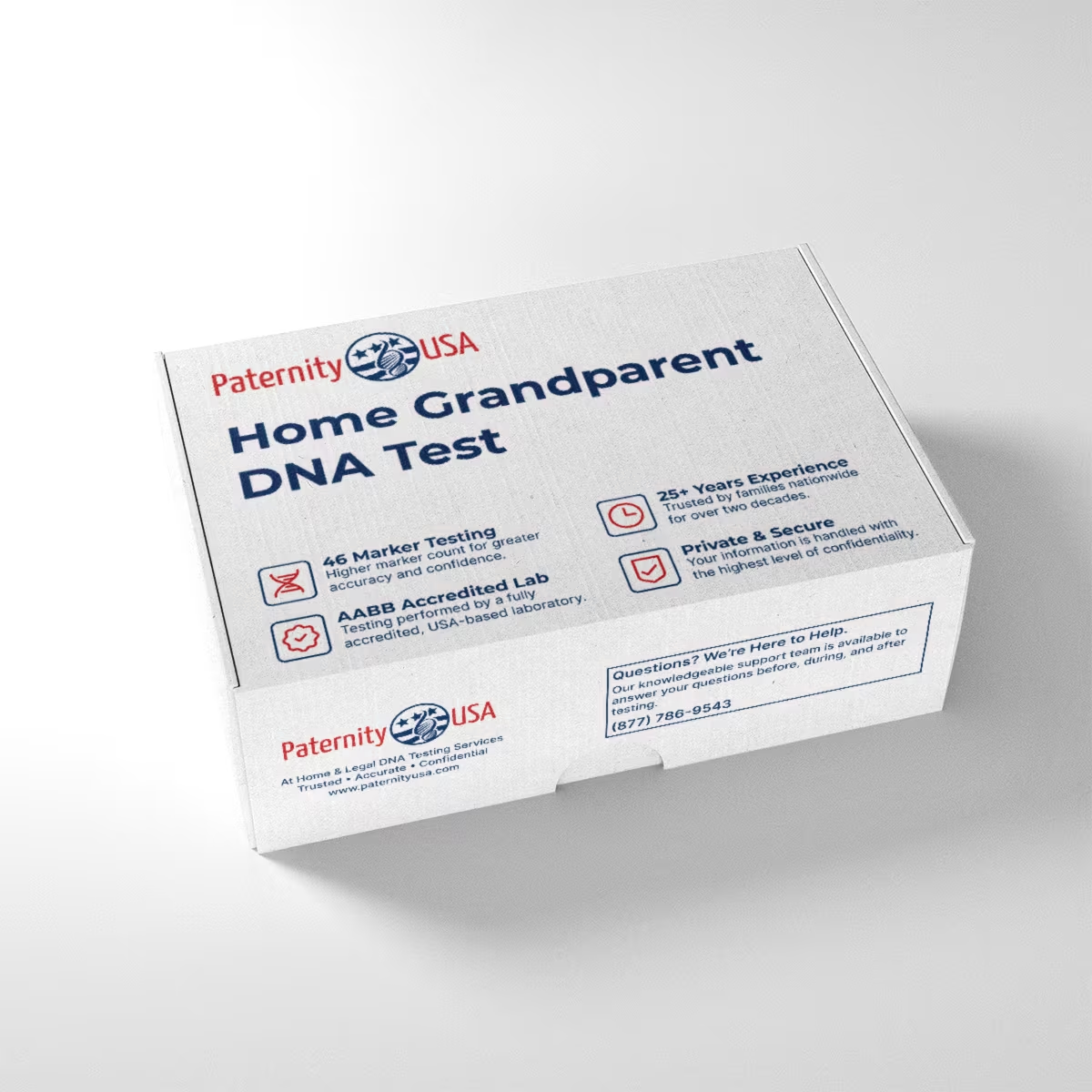
A grandparent DNA test can help determine whether a child is biologically related to an alleged grandparent when a direct paternity test is not possible. Because this is an indirect relationship test, result strength depends on the participants included and the number of genetic markers analyzed. Testing is performed by an AABB-accredited U.S. laboratory and reviewed by qualified scientists.
Stronger results are typically achieved by including the child’s mother, testing both grandparents when available, and analyzing more genetic markers.
Testing Options:
34 Marker Test ($125): A reliable option when testing mother and/or both grandparents.
46 Marker Test ($175): Analyzes more genetic markers to provide stronger statistical support when fewer participants are available.

Testing is performed by an AABB-accredited U.S. partner laboratory using established relationship DNA testing methods.
For more than 25 years, we have helped families arrange paternity and relationship DNA testing nationwide.
Higher marker testing may provide stronger statistical support in certain complex relationship cases.
Results are delivered in 2-3 days with confidential handling of samples and secure reporting throughout the testing process.
A grandparent DNA test helps evaluate a biological relationship indirectly by comparing the DNA of an alleged grandparent or grandparents with that of a child. This type of testing is most commonly used to support paternity evaluation when the alleged father is unavailable or unwilling to participate.
Grandparent DNA testing analyzes shared genetic markers to calculate the statistical probability of a biological relationship. Because this is an indirect test, analyzing a higher number of genetic markers can help improve result confidence.
34 Marker Test: Our 34 marker grandparent DNA test analyzes up to 34 genetic markers and includes the child’s mother at no additional cost when available. This option is priced at $125 and includes fast shipping both ways.
46 Marker Test: Our 46 marker test analyzes 46 genetic markers to provide stronger statistical support, especially when fewer participants are available. This option is priced at $175 and includes fast shipping both ways.
This at-home grandparent DNA test includes fast shipping both ways, with secure and confidential results typically available within 2–3 business days after the laboratory receives all samples. If you need help, please call us at (877) 786-9543, and speak to an experienced DNA testing expert.
$125
24-34
Marker Count
FREE
mom inclusion
High
Conclusiveness
FREE
2-Way Shipping
$175
46
Marker Count
Extra Fee
for mom inclusion
Highest
Conclusiveness
FREE
2-Way Shipping
Up to $299
16-22
Marker Count
Extra Fee
for mom inclusion
Variable
Conclusiveness
Variable Pricing
on 2-Way Shipping
The grandparent DNA testing process is simple, private, and designed for convenience. From ordering your kit to receiving your results, each step is handled according to established laboratory procedures to support accurate DNA analysis and a clear understanding of the statistical findings.
Order An At Home Grandparent TestAfter your online or phone order is received, we ship a sterile grandparent DNA testing kit at no additional charge. The kit includes all required swabs and a prepaid, pre-addressed return envelope to send samples directly to the laboratory. Tracking is available both ways.
DNA sampling is painless and completed using a cheek (buccal) swab by gently rubbing the swab along the inside of the cheek and gum, then placing it into the provided sample envelope.
When samples arrive at the laboratory, you will be notified by email and testing begins. The lab analyzes the genetic profiles of the tested grandparent(s) and child and calculates a grandparentage index, which is used to evaluate the likelihood of a biological relationship.
Once testing is complete, results are delivered securely by email and mailed hard copies are provided when requested.
For over 25 years, families across the United States have trusted PaternityUSA for reliable DNA testing and knowledgeable client support, serving hundreds of thousands of clients nationwide with fast, confidential results.
“In my opinion I am very satisfied. I have an adult daughter that’s 24 years old now that I did not know I had. The results came in very quickly, took a couple of days, and I am very pleased with this product. If I need it again, this is what I’ll get. I will definitely recommend this to anybody that needs to do a DNA test.”

If you’re considering a grandparent DNA test, you may have questions about accuracy, how the testing process works, and what the results can tell you. The answers below address the most common questions and explain how testing can help establish a biological relationship when a parent is unavailable. This information has been reviewed by a DNA testing specialist with over 20 years of experience, and all testing is performed by AABB-accredited laboratories.
Learn More About Grandparent DNA Testing
Can a grandparent take a paternity test instead of the potential dad? YES, it's possible! A grandparent DNA test can be super helpful when you need to figure out family…
Read More
April 3, 2024

Let's start with the quick answer: Yes!, it is possible. But there are some important things to understand first. When it's just grandma and the grandkid, what you'd be…
Read More
April 1, 2024

Ever wondered if those grandparent DNA tests you see online are for real? Like can they seriously prove if Grammy and Gramps are actually your grandparents? Or are they…
Read More
March 29, 2024
Which Grandparent Are You Most Related To? Many people are surprised to learn that DNA inheritance from grandparents is not evenly split. You may feel closer to one gra…
Read More
March 27, 2024

Grandparent DNA Testing: Grandparent DNA testing can help answer family questions like, "Is That My Grandchild? ".. PaternityUSA utilizes cutting-edge grandparent DNA t…
Read More
March 14, 2024

About Grandparent DNA Testing: Grandparent DNA testing is an excellent way to find out for sure if you share a biological relationship with a grandchild. There are many…
Read More
March 12, 2024
When a DNA testing participant is unwilling to participate or is unable to provide a mouth swab for their DAN test, the question: " Can a DNA test be done with a strand…
Read More
March 8, 2024

PaternityUSA offers relational DNA testing services allowing clients to evaluate whether a biological relationship may exist, such as paternity , sibling , grandparent …
Read More
March 7, 2024
Today's digital age has made privacy become a hot topic. When using social media or going online to shop for a a product we must constantly remember just how important…
Read More
March 2, 2024

Search Products